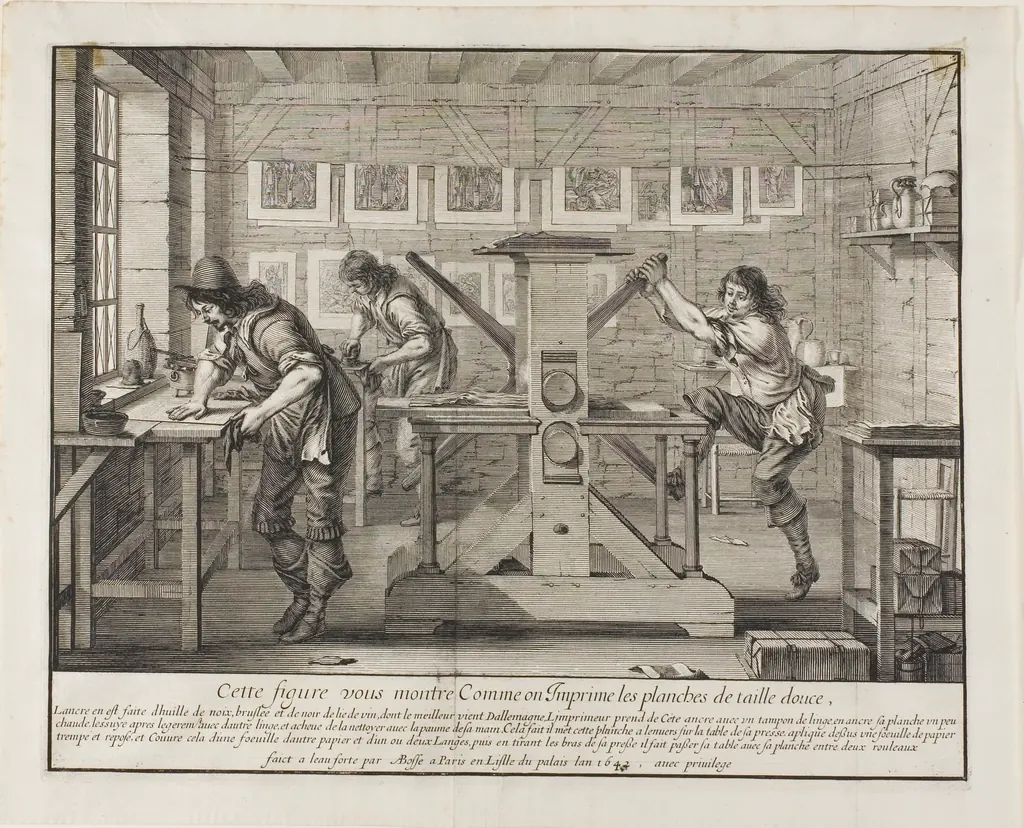
What makes a print a print?
Printmaking transfers an image from a prepared surface, called the matrix, onto paper. The matrix might be a block of linoleum, a copper plate, a sheet of plexiglass or a collaged board. Because the matrix can be inked again, one image can exist as several original impressions. That's what makes original prints the most affordable way to own a real artist's work, as explained in our collecting guide.
Techniques at a glance
| Technique | Family | Key tools | Press needed? | Look |
|---|---|---|---|---|
| Linocut / woodcut | Relief | Carving tools, brayer, baren | No | Bold shapes, graphic line |
| Collagraph | Intaglio or relief | Board, glue, textures, press | Usually | Rich texture, painterly tone |
| Monotype | Planographic | Plexi plate, ink, brushes | No | One-of-a-kind, painterly |
| Drypoint | Intaglio | Scribe, plexi or copper, press | Yes | Velvety burred line |
| Etching | Intaglio | Metal plate, ground, mordant, press | Yes | Fine line, tone with aquatint |
| Screenprint | Stencil | Screen, squeegee, stencil | No | Flat, vivid color |
Relief: linocut and woodcut
Carve away everything you don't want to print, roll ink across the surface and press paper onto it. Linoleum is soft and even, wood has grain that can become part of the image. Read the full guide: How to Print a Linoleum Block.
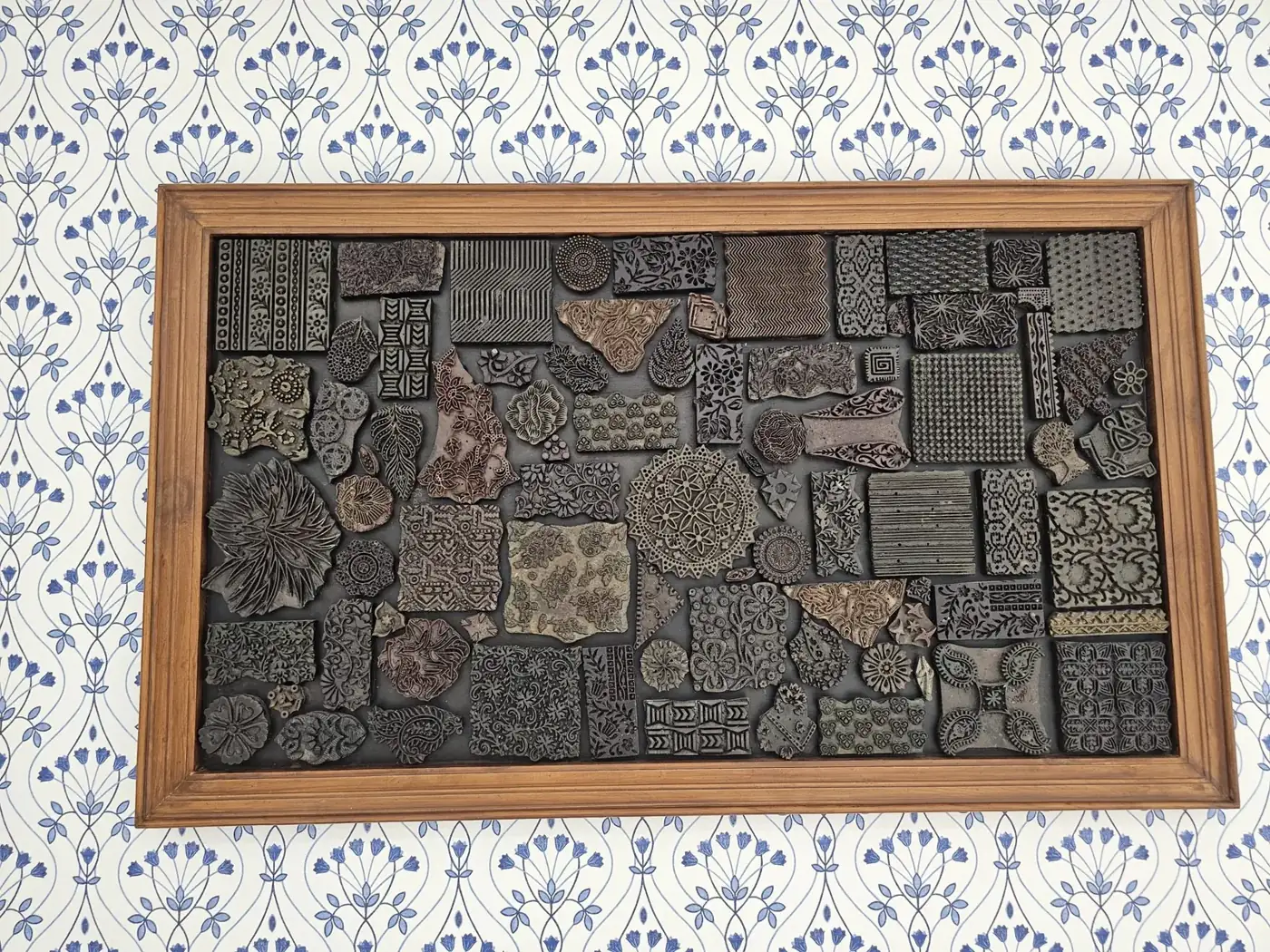
Reduction prints
A multi-color print from a single block: print the lightest color across the whole edition, carve away what should stay that color, print the next color and repeat. The block is destroyed as you go, so the edition size is fixed from the start.
Collagraph
A plate collaged from textured materials (lace, card, grit, gel medium), sealed and inked like an etching or a relief block. It is a wonderfully forgiving, tactile technique. See Paper Quilts.
Monotype and ghost prints
Paint or roll ink onto a smooth plate, wipe and draw into it, then print. Only one strong impression comes off, which makes every monotype unique. Run the plate through a second time and you get a ghost, a softer echo of the first. Tiny monotypes, just an inch or two across, make intimate jewel-like pieces.
Intaglio: etching and drypoint
Lines are cut or bitten into a plate. Ink is pushed into them, the surface is wiped clean and damp paper is forced into the lines under heavy press pressure. Drypoint scratches directly into the plate, raising a burr that prints a soft, velvety line. Etching uses acid (or safer modern mordants) to bite lines drawn through a protective ground. Bisbee's copper heritage makes copper-plate etching a fitting local technique.
Choosing paper
- Japanese papers (hosho, kitakata, mulberry): thin, strong, ideal for hand-burnished relief prints.
- Western printmaking papers (cotton rag, mould-made): heavier sheets for press work and intaglio, usually dampened first.
- Newsprint for proofs, always.
Beyond the single print
Prints are building blocks. Bind them into artists' books, stitch them into paper garments, mail them in an exchange, or frame them and hang them well.
Questions
What is the easiest printmaking technique for beginners?
Monotype and linocut. Monotype needs only a smooth plate, ink and paper; linocut needs a block, a few gouges and a brayer, and both can be printed by hand.
Do I need a printing press?
Not to start. Relief prints and monotypes can be burnished by hand with a baren or wooden spoon. Etchings, collagraphs inked intaglio and drypoints need an etching press.
What's the difference between relief and intaglio?
In relief printing the raised surface takes the ink; in intaglio the ink sits in grooves and recesses below the surface and is pressed out onto damp paper.