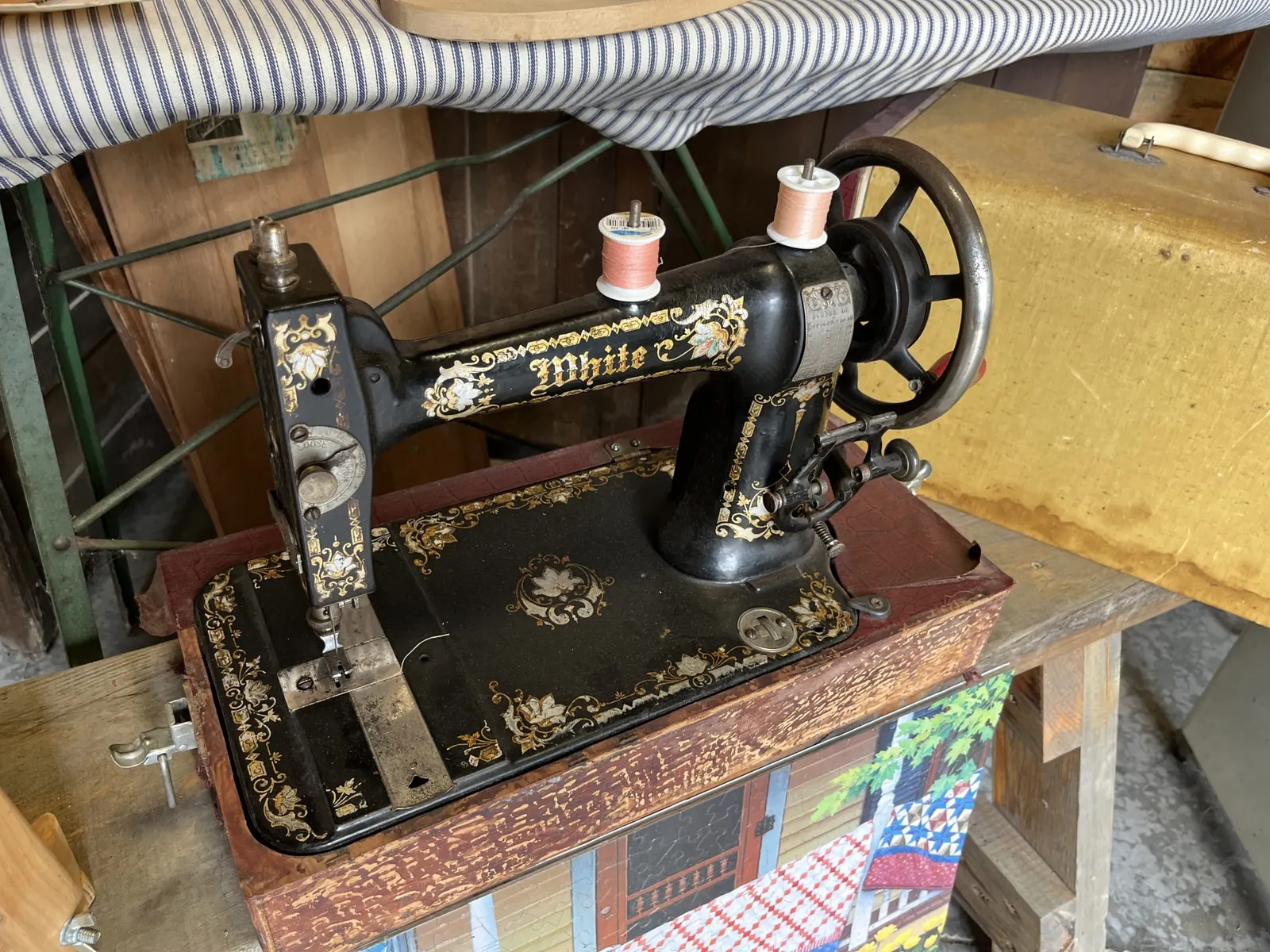
A line of stitching on paper does something a drawn line can't: it pierces, it puckers, it has a back side. Paper dresses, folded garments and stitched drawings have been a recurring thread in this studio's history, so here's how to start.
Machine stitching
- Use a fresh needle and keep it for paperA size 90/14 universal needle works; paper will dull it for fabric.
- Lengthen the stitchAround 3–4 mm. Short stitches perforate paper like a tear-off coupon.
- Loosen the top tension slightlyPaper doesn't stretch, so tight tension puckers it.
- Sew slowly and pivot with the needle downThis gives clean corners and curves.
- Leave long thread tailsPull them to the back and tie off, or let them hang as part of the drawing.
Hand stitching
Pre-punch holes with an awl, through a template, so they line up and don't wander. Waxed linen thread is strong and holds its shape; embroidery floss gives softer color. A running stitch reads as a dotted line; a backstitch as a continuous drawn line.
Folding paper garments
A dress is a simple, powerful form: instantly read as a body, a person, a memory. Paper dresses can be folded from a single sheet (think origami shirts), cut from a pattern and stitched at the seams, or printed flat and assembled afterward. Try printing a collagraph texture onto the paper first, so the "fabric" has a pattern.
A sketchbook project
Pick one form, such as a dress, a house or a chair, and make it thirty times in a single sketchbook, varying only the material and the stitch. Constraint pushes invention, and a bound sketchbook of variations becomes an artist's book in its own right.
Questions
Can I sew paper on a regular sewing machine?
Yes. Use a dedicated needle (paper dulls it quickly), a longer stitch length around 3 to 4 mm, and sew slowly so the perforations don't join up and tear.
What paper is best for stitching?
Medium-weight papers with long fibers, such as printmaking papers, Japanese papers and good drawing papers. Very thin or brittle papers tear.